
Four Cloudflare Workers and a Kilt Shop
Historic Edinburgh business goes programmatic.
June 2026, my sister got married — congrats, Floyd — so I needed a kilt. Davison Menswear & Kilt Hire happened to be close. Shop was easy to spot: hand-painted marquee, logo, Est. 1927, and a broken URL.
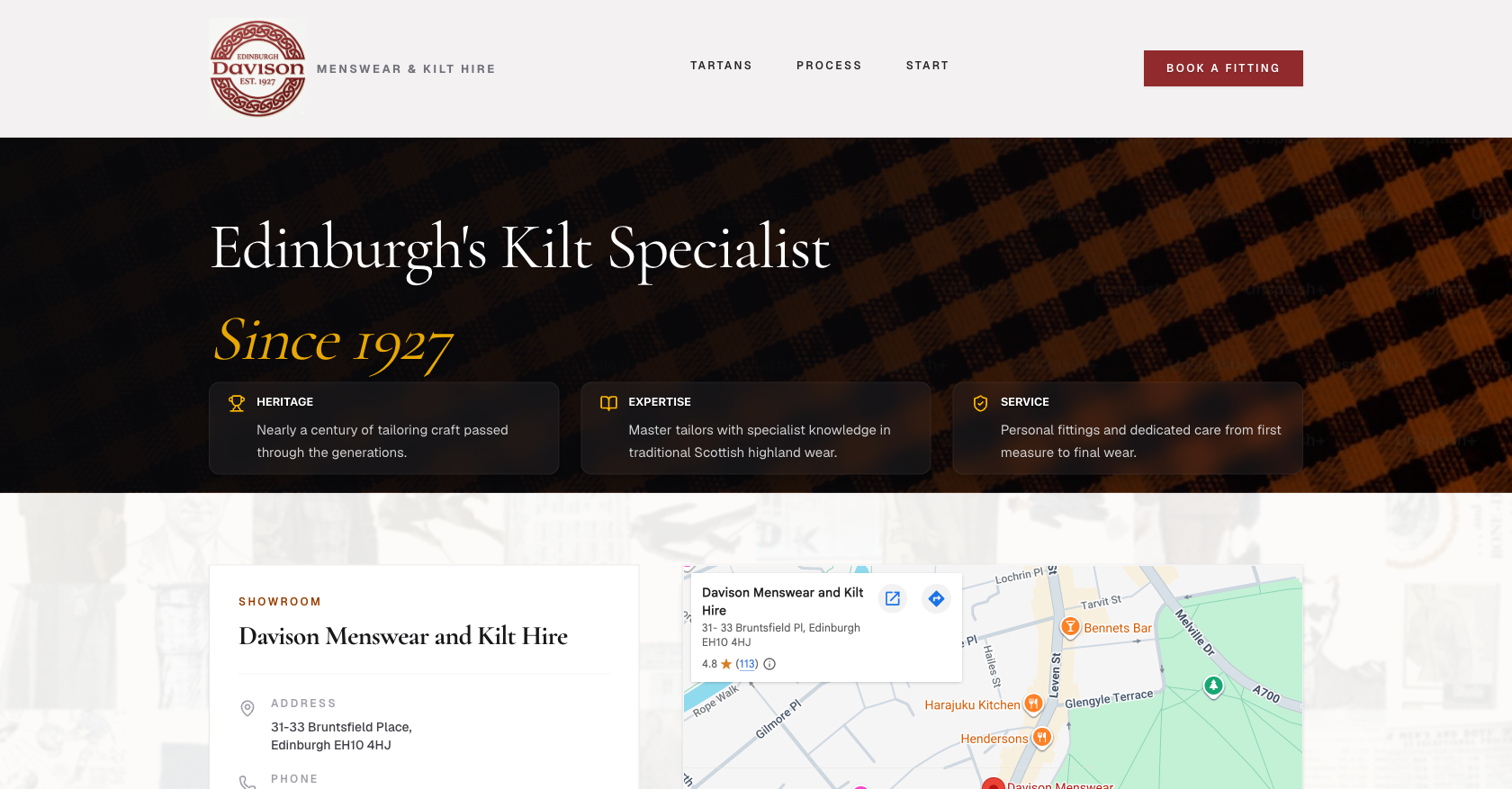
Spend time in Bruntsfield and you'll spot Marty: kilted, dog at heel. Generational talent. Working alone, he sews from memory in a showroom unchanged since his father's day.
His methods, while proven, showed age: calendar bookings misplaced, missed calls, staying late to rewrite orders. He was keen on upgrading; old site was down for years.
Requirements
Unrealistic to expect a kilt maker to learn new tools after decades on paper.
Demoing Sicamon — my Stripe CMS — was too much change. Not looking to become an overnight shop. Every tool had to feel familiar.
Design
Project splits into two main pages: public business and private orders dashboard. Tailwind enforces consistent design — utility classes, typography.
We wanted heritage design notes. Marty handed me a binder of original marketing adverts from 1920/1950: hand-drawn illustrations, commissioned artwork (took ages to scan).
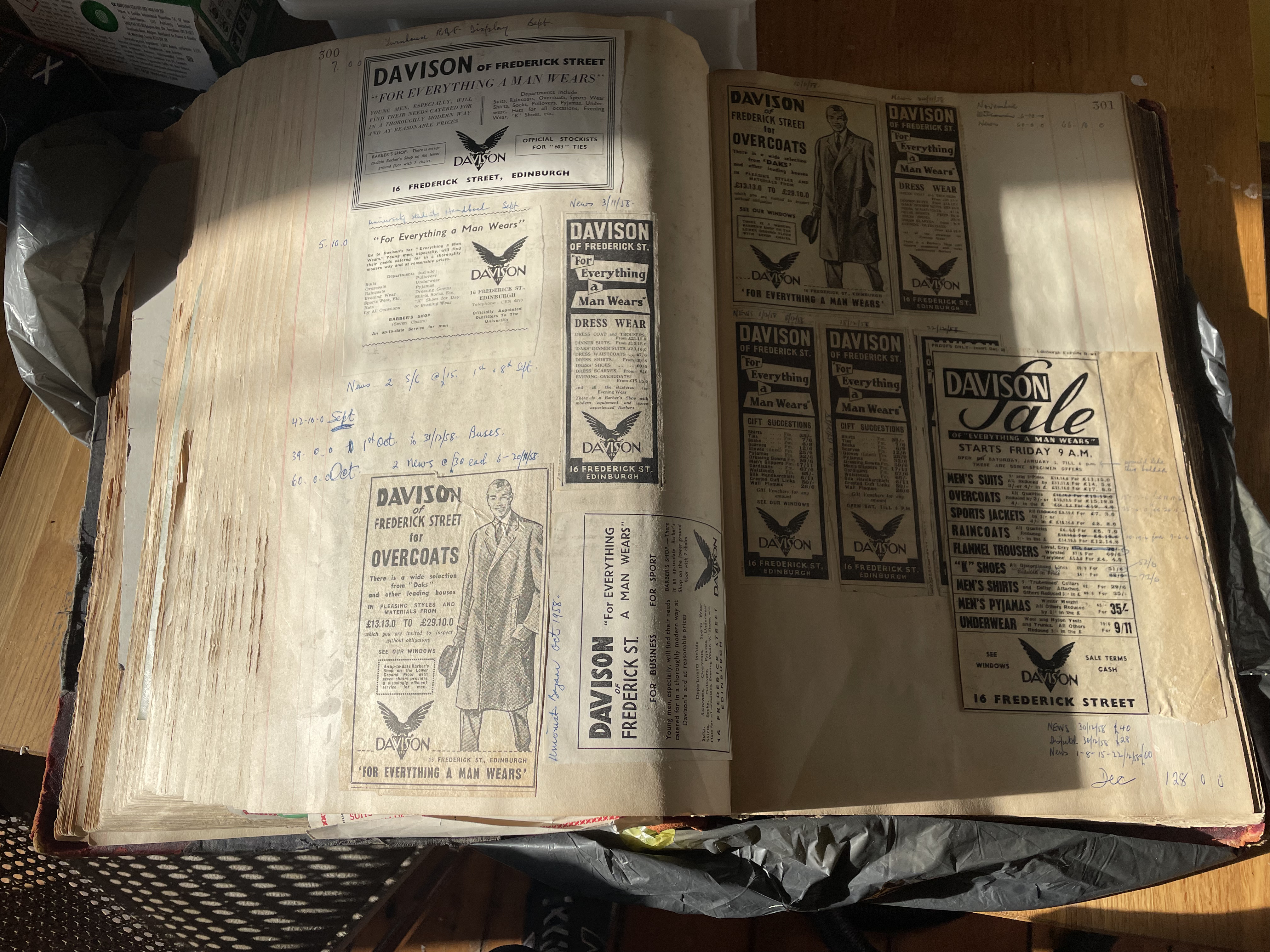
Original archive binder
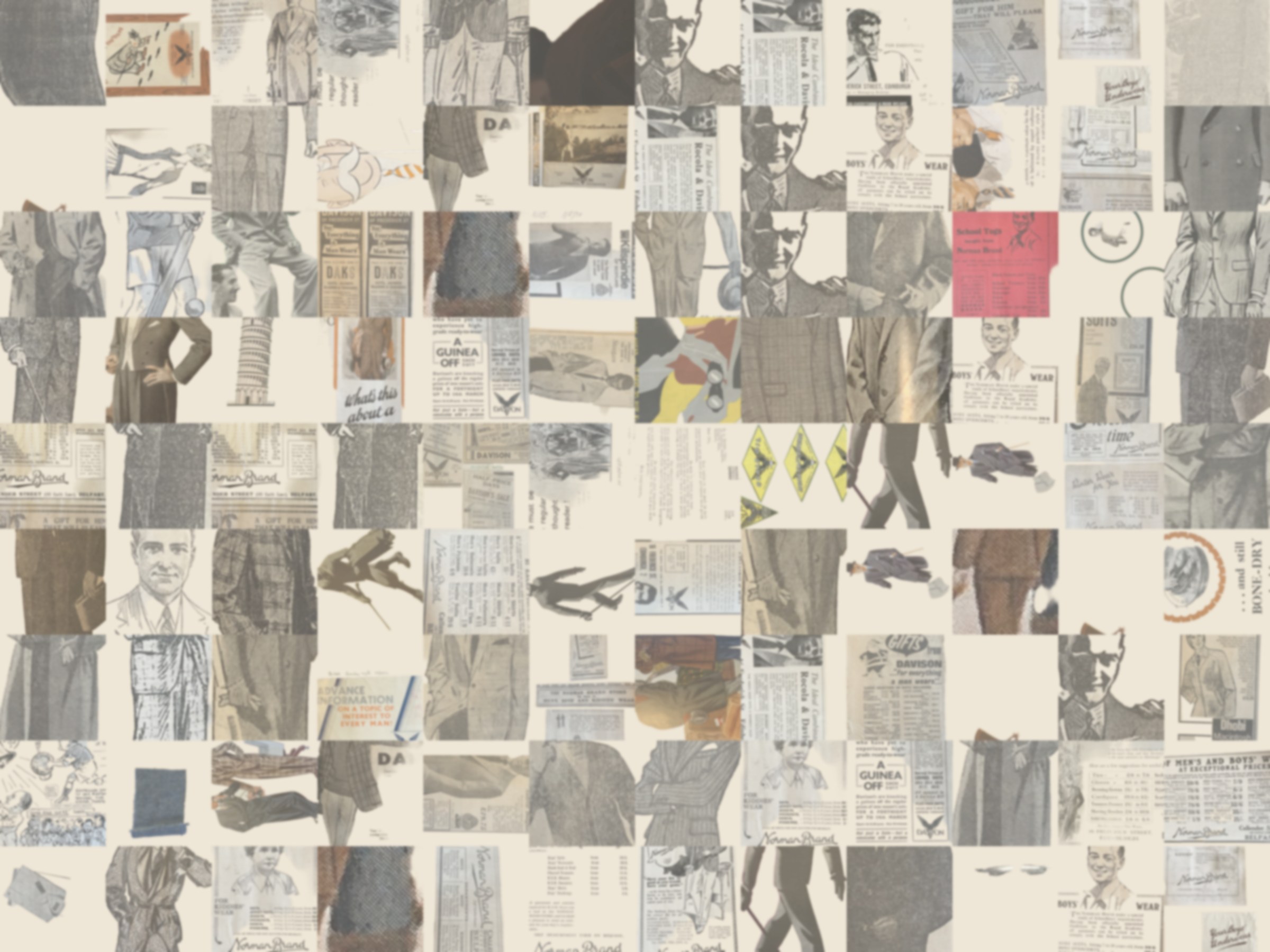
Archival photos composited into site background — binder became brand.
Workers
Admin Dashboard Worker — Order management backed by D1. Status tracking, CSV exports, automated emails.
Calendar Worker — Dedicated worker with its own credentials. Talks to Google Calendar for slot management — availability checks, event creation, closures.
Frontend Worker — The shop window. Serves every page — hero, map, services, tartan search widget, reviews, and booking button. Static build, globally distributed.
Reviews Worker — Pulls Google Reviews on a schedule into KV. Fresh content, zero effort.
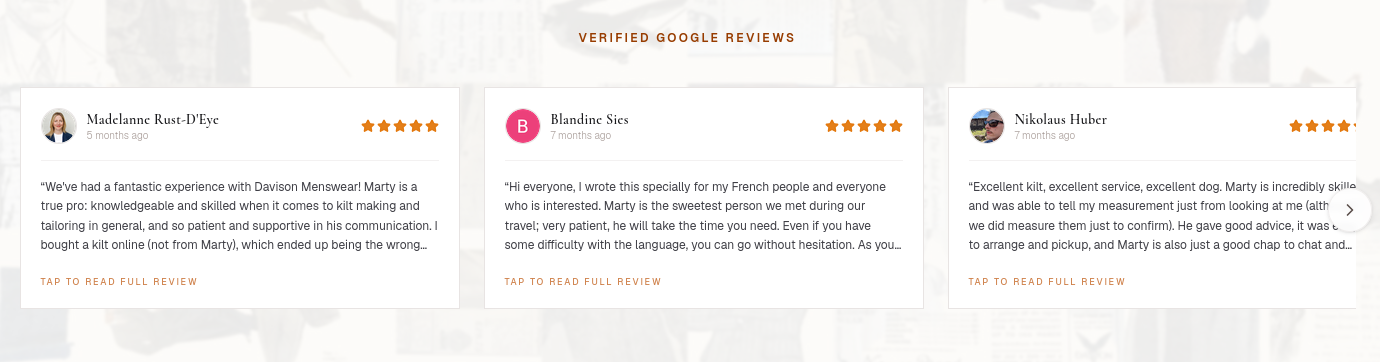
Reviews widget on live site.
Tech Stack
Stack costs nothing. Workers scale between bookings and free tiers cover traffic.
Runs on:
- Workers
- D1
- KV
- Turnstile
- Resend
- Next.js
- Tailwind
- Google Calendar
- GitHub Actions
Main Site
Business site's a single page: header, map, services, tartan search, reviews, and bookings.
Tartan register's nice-to-have — searchable clan directory from official hex codes.
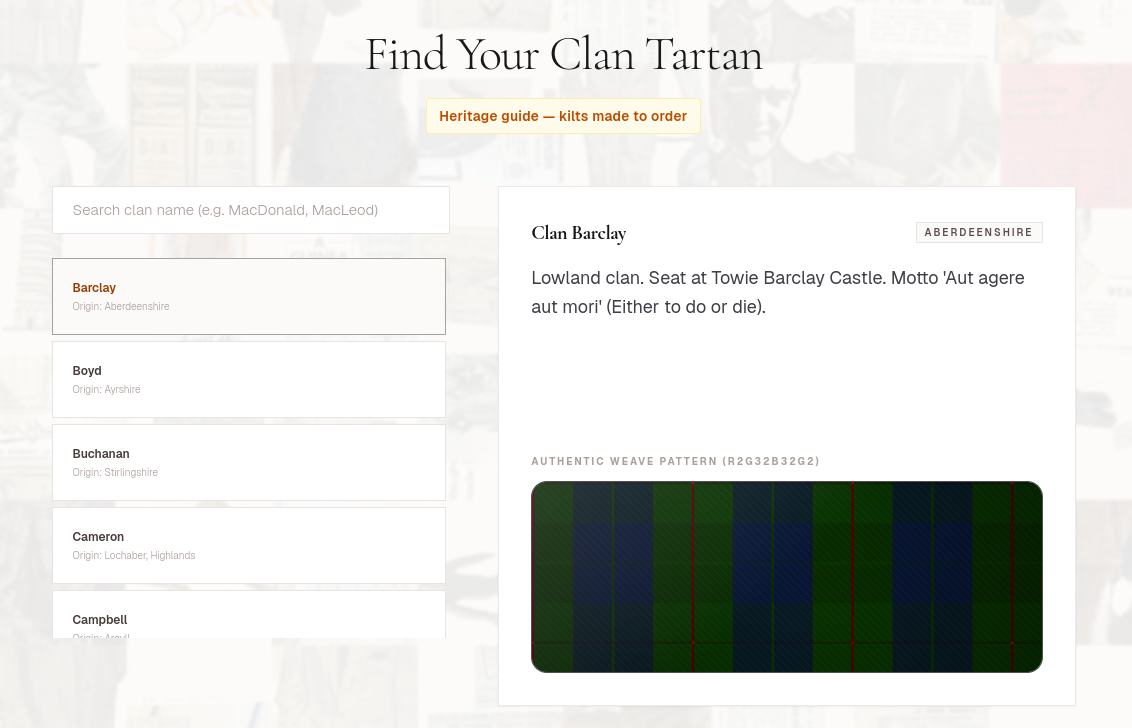
Searchable directory of clan and district tartans
Rest of page's more practical. Clicking "Book" triggers:
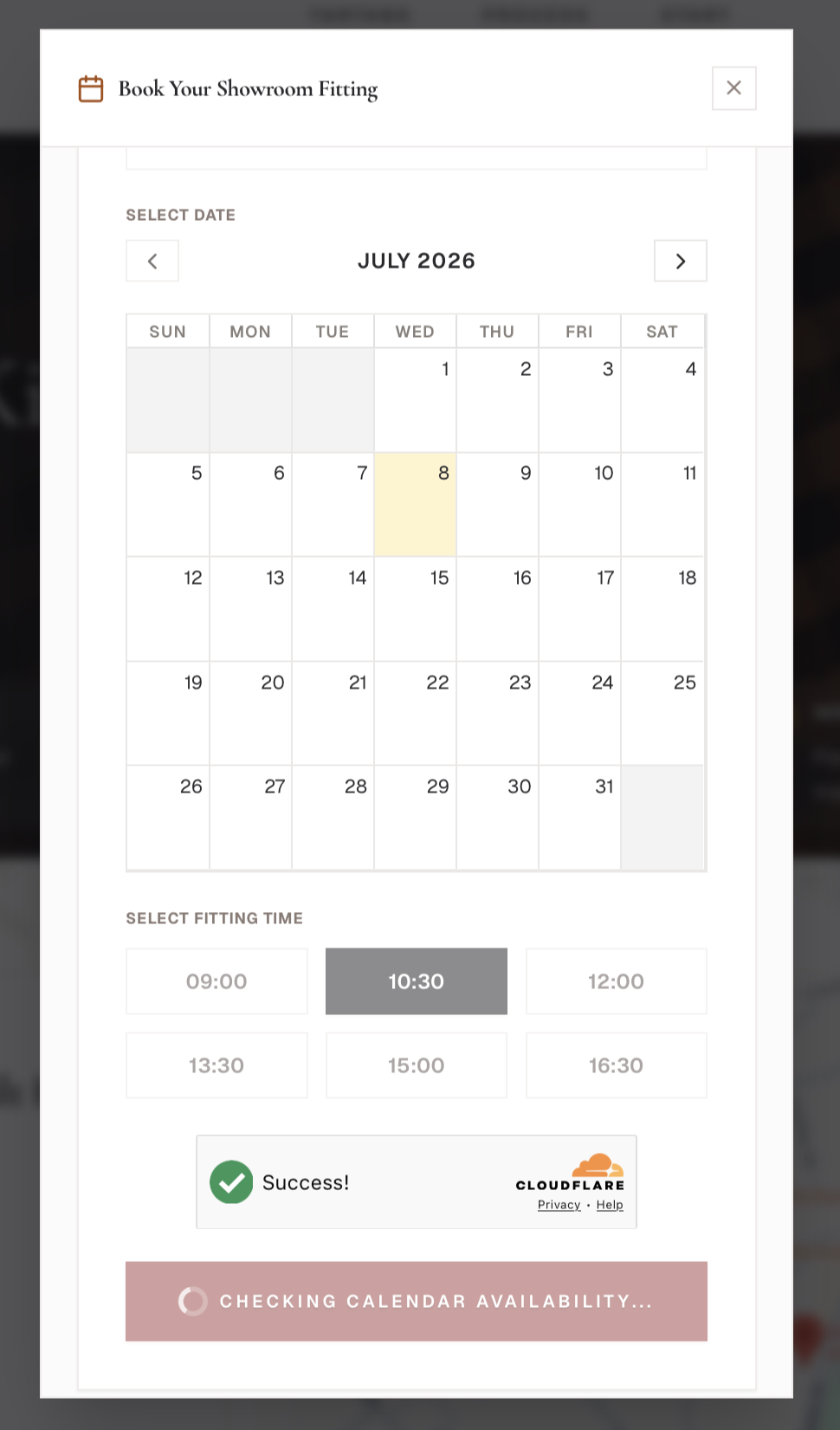
Booking form with Turnstile on submit
Booking Pipeline
- Bot detection — Turnstile, invisible
- Input validation — malformed data rejected
- Closure check — reads
[Closed]calendar events - Slot availability — no double-booking
- Event creation — writes to Google Calendar
- Cancel link — signed JWT in the event
- Notifications — async emails to both customer and site owner, never blocks
Customer and site owner receive email alerts:
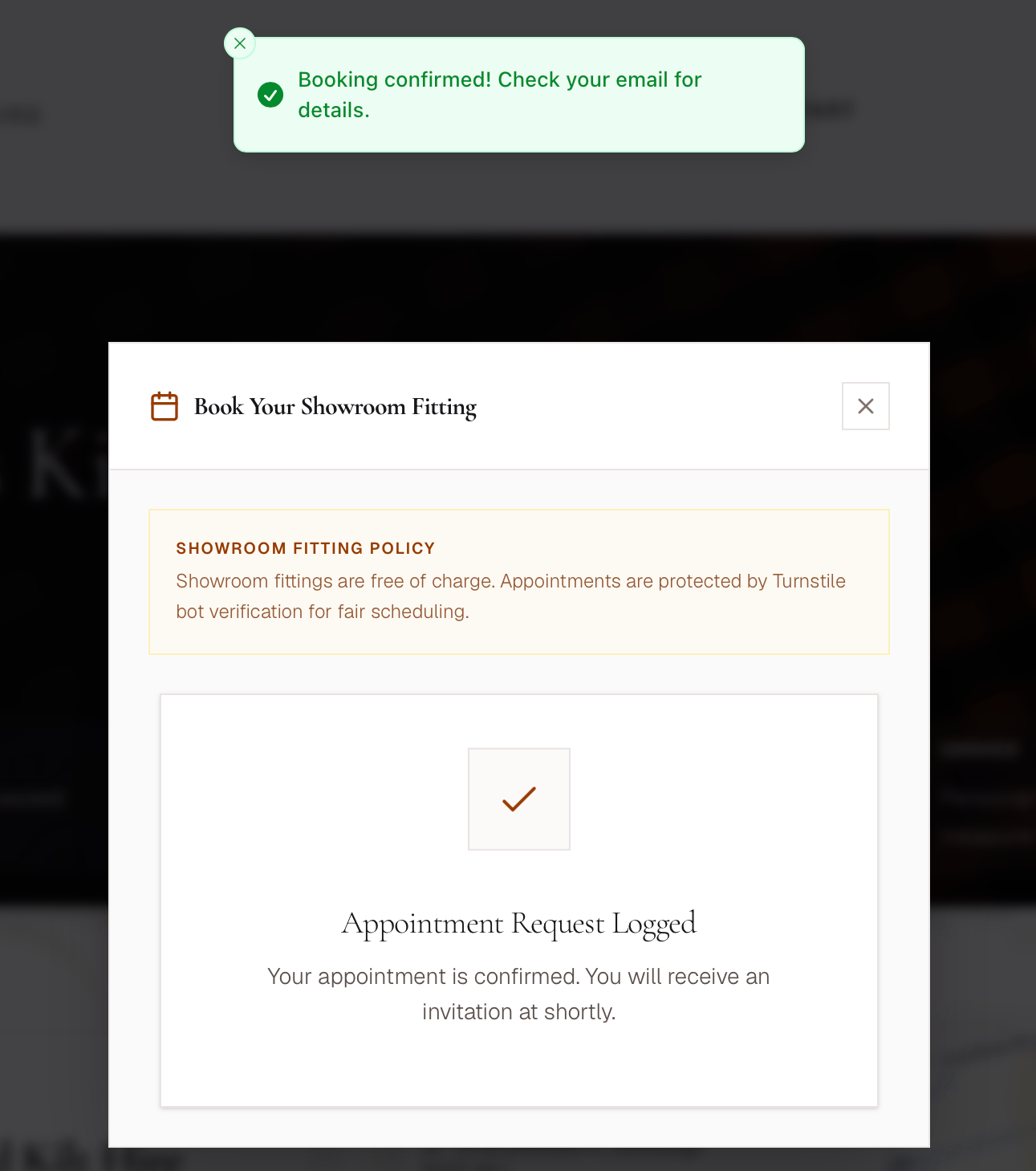
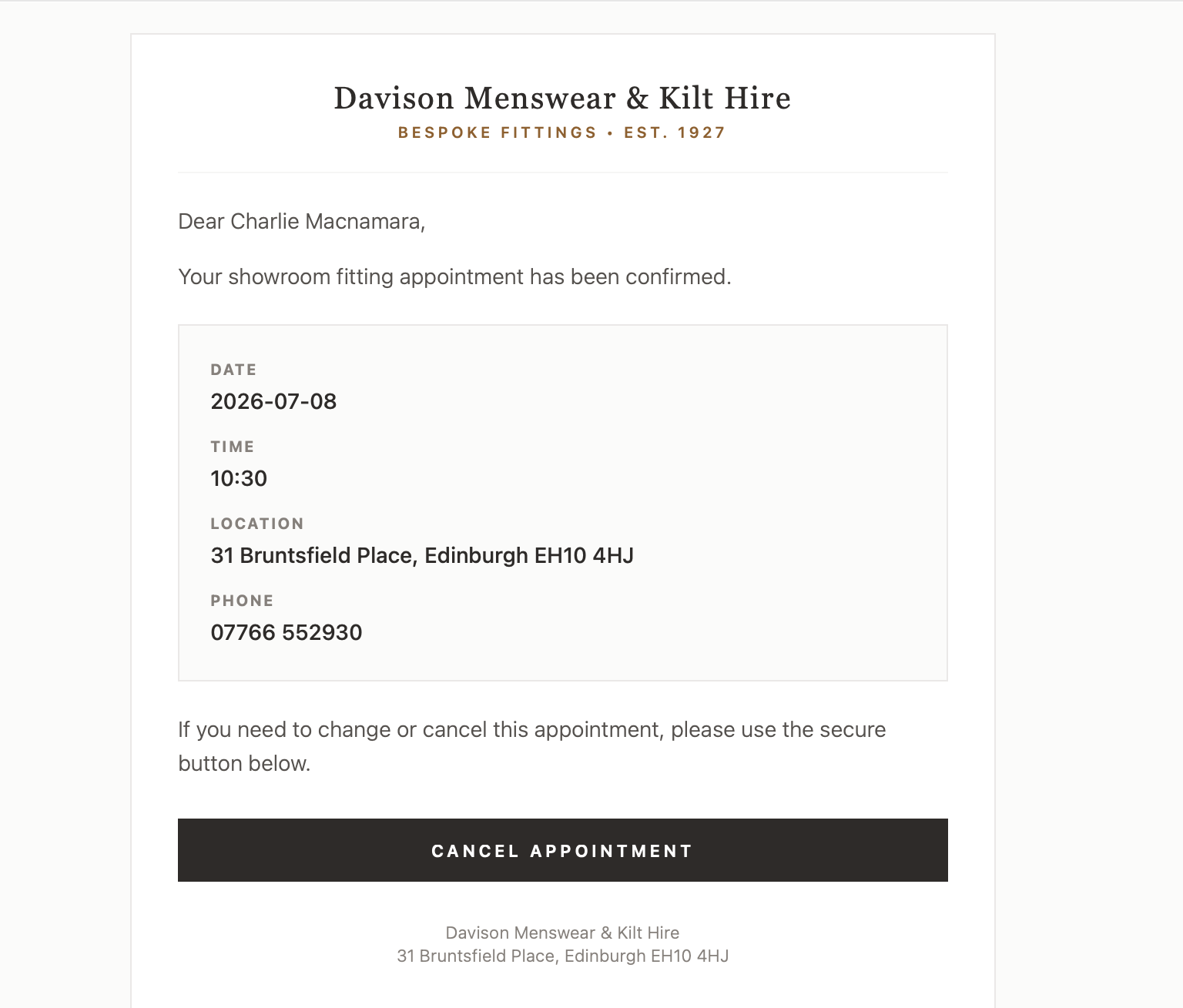
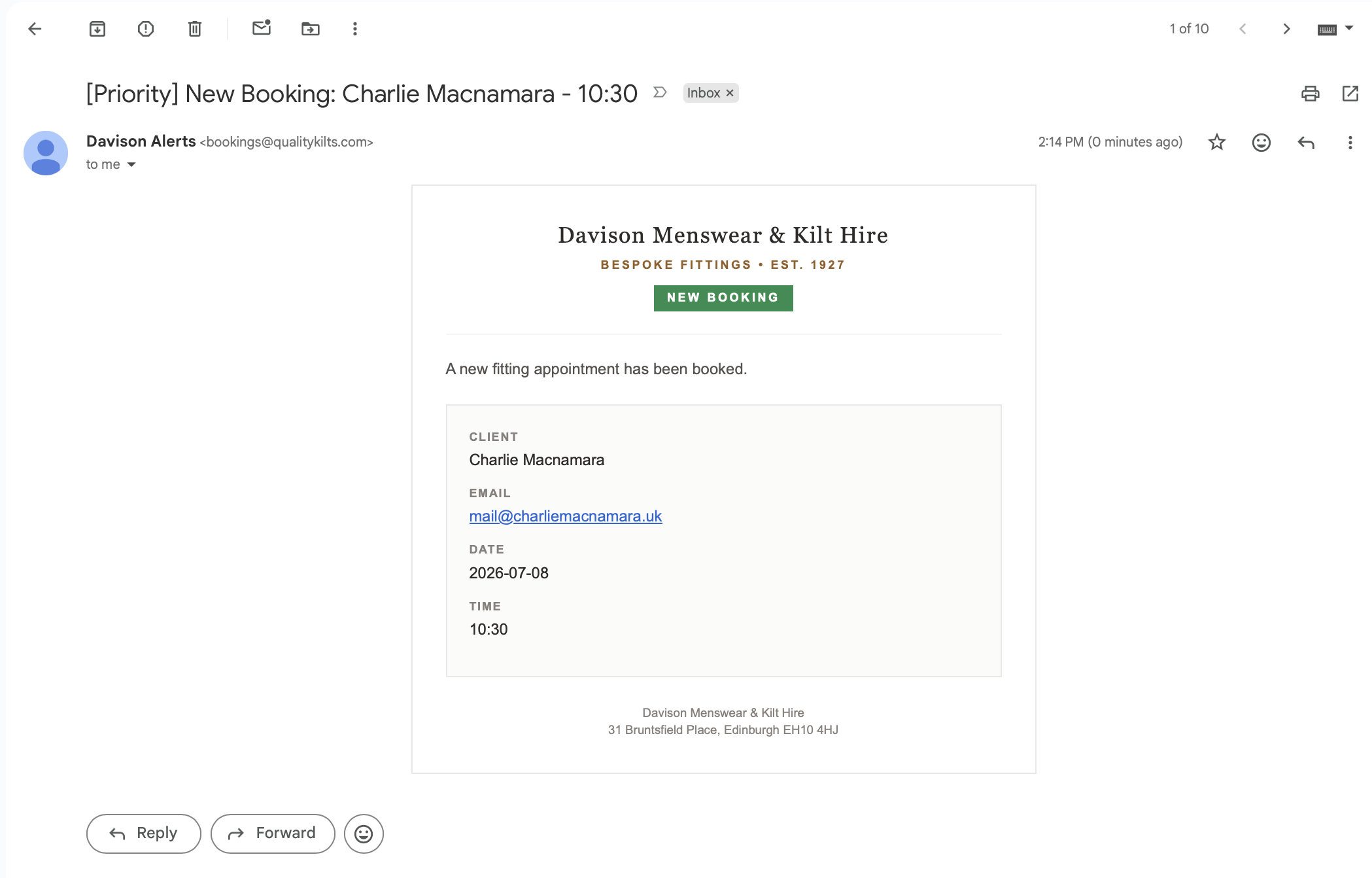
Customer sees booking confirmed.
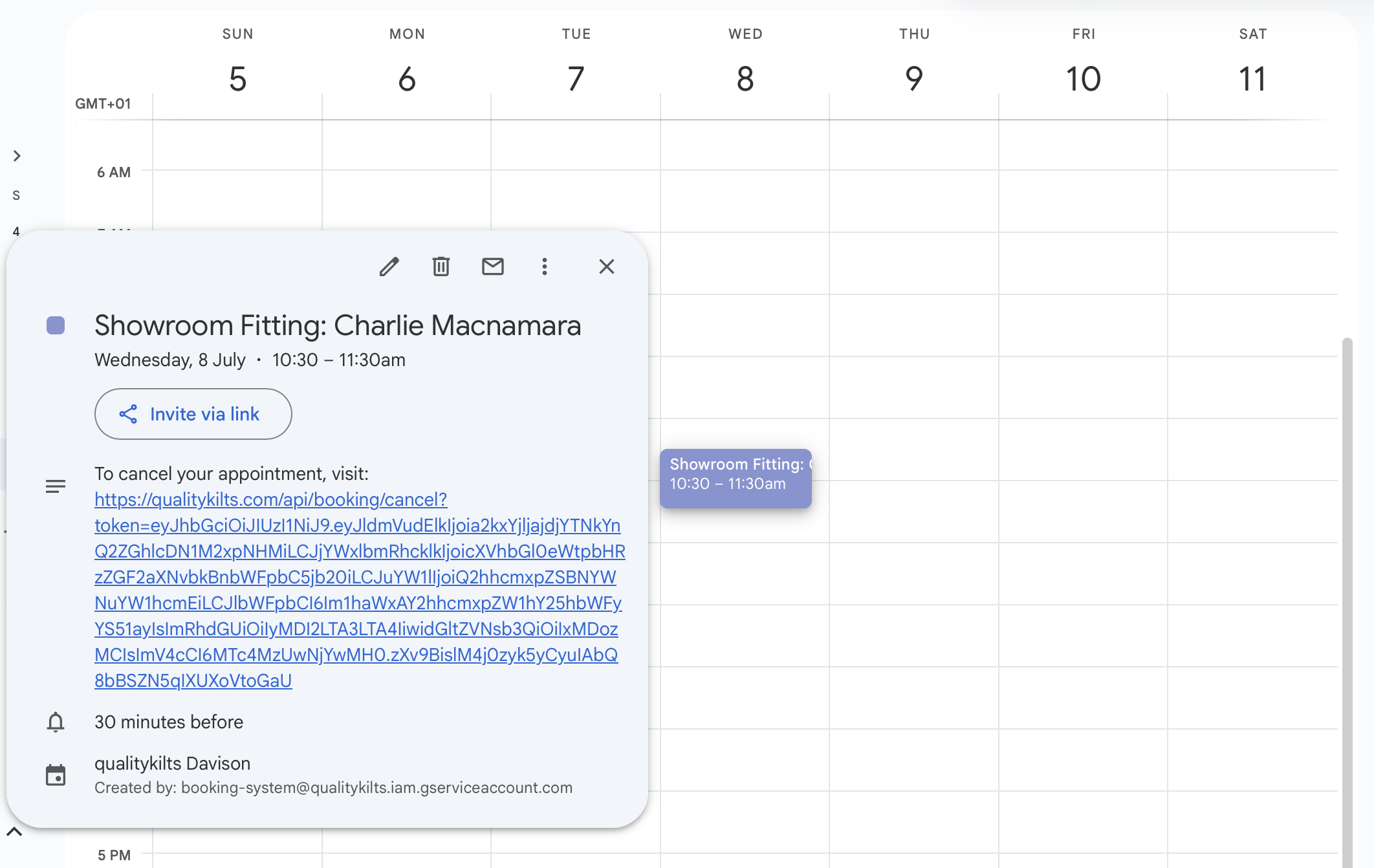
Google Calendar handles booking.
Admin Dashboard
Private notepad replacement, backed by D1.
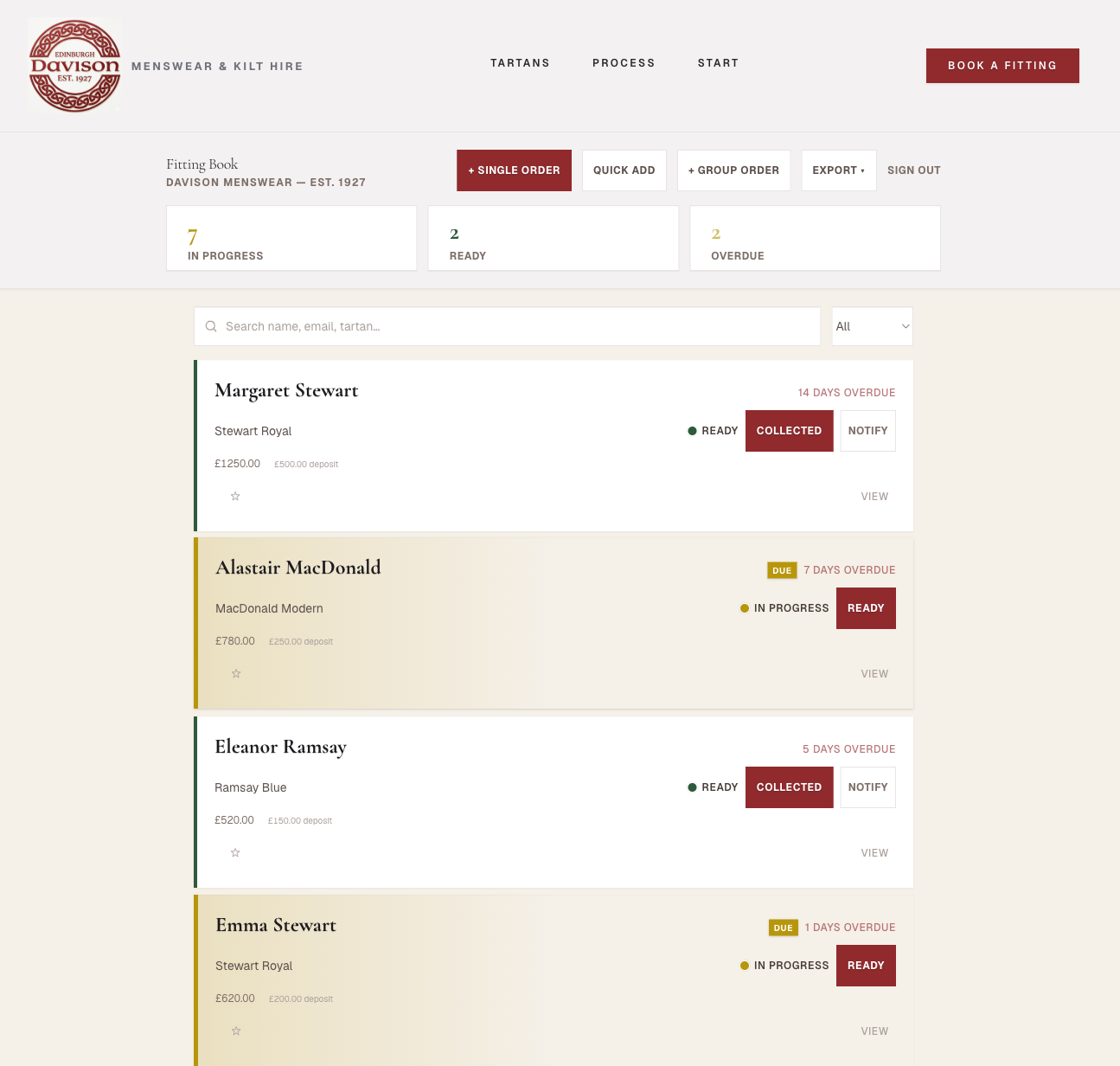
Admin dashboard
Four statuses: In Progress, Ready, Delivered, Cancelled. Every transition logged immutably — who changed it, when, and whether the email went out.
Emails fire on status changes via Resend. Receipt includes bank details — stored as Worker secrets, never in the codebase. On creation, the customer gets payment instructions. When ready, a collection email fires.
CSV export: current tax year, last year, or custom range. Clean totals.
Quick Add for reconciling past orders.
Add Single Order — measurement references and a notify toggle, with an option for group orders.
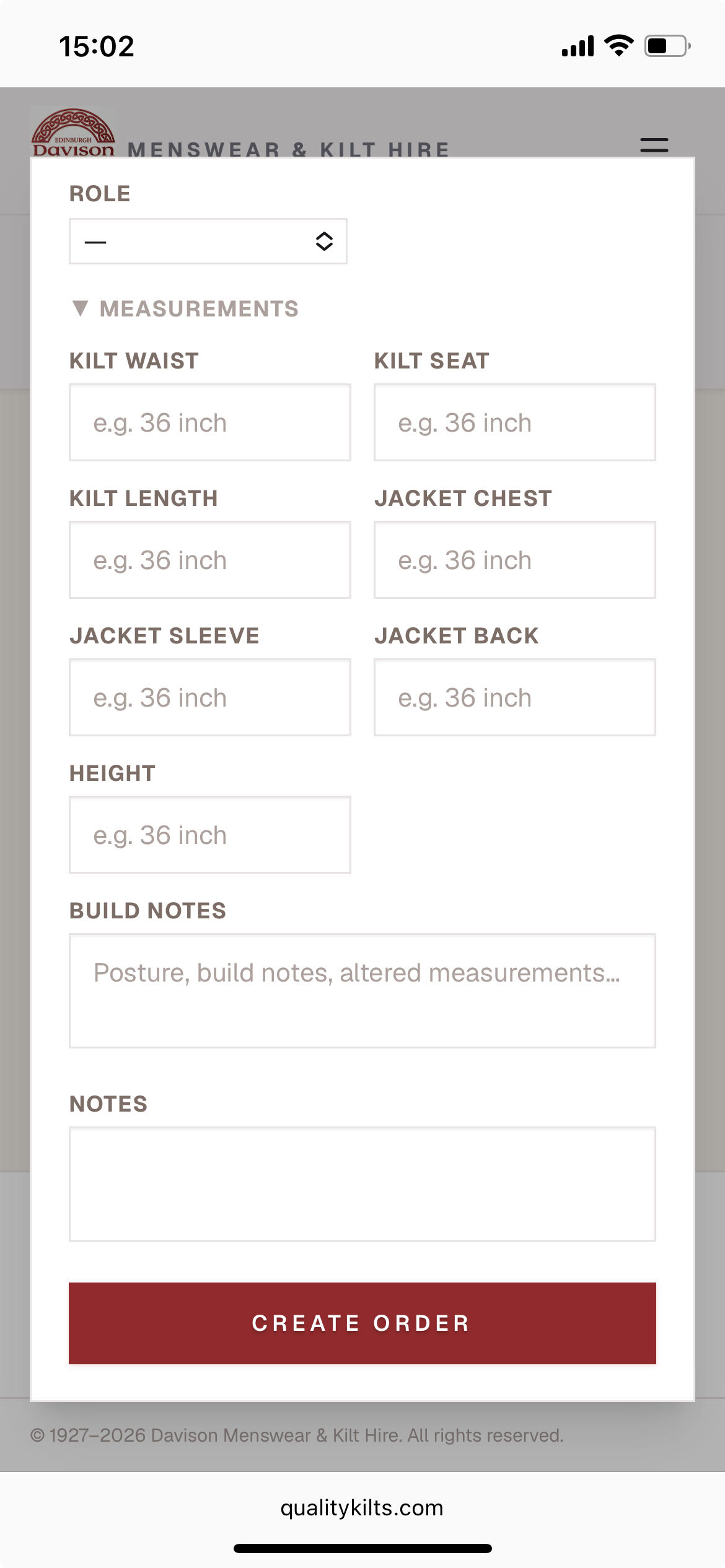
Add Single Order — every order starts here
Testing
Booking drop? That's a customer standing outside... five stages sit between production.
Static audits catch hardcoded secrets and broken contracts before test even runs. Worker tests (Vitest + Miniflare) mock every external dependency.
Integration and E2E tests prove real integrations work (Google Calendar, Resend, Turnstile) and drive full booking flow and admin lifecycle.
Pre-deploy checks probe all workers before deployments. If something's degraded, the deploy stops. Once live, post-deploy monitoring probes every six hours, runs a worker self-check, and Lighthouse scores every deploy.
CI/CD
Every push to main runs lint, TypeScript,
audit rules, worker tests,
Playwright.
If they pass, Workers deploy in sequence: calendar, reviews, admin with D1
migrations, then main site.
Health probes verify endpoints mid‑pipeline. Deploy stops if any probe fails.
Final
Binder's back, same marquee hangs, and qualitykilts.com's live. Marty still works in his showroom — now without missed calls or double-bookings. Our family's a little bigger too.
Thanks for reading. Reach out at mail@charliemacnamara.uk.